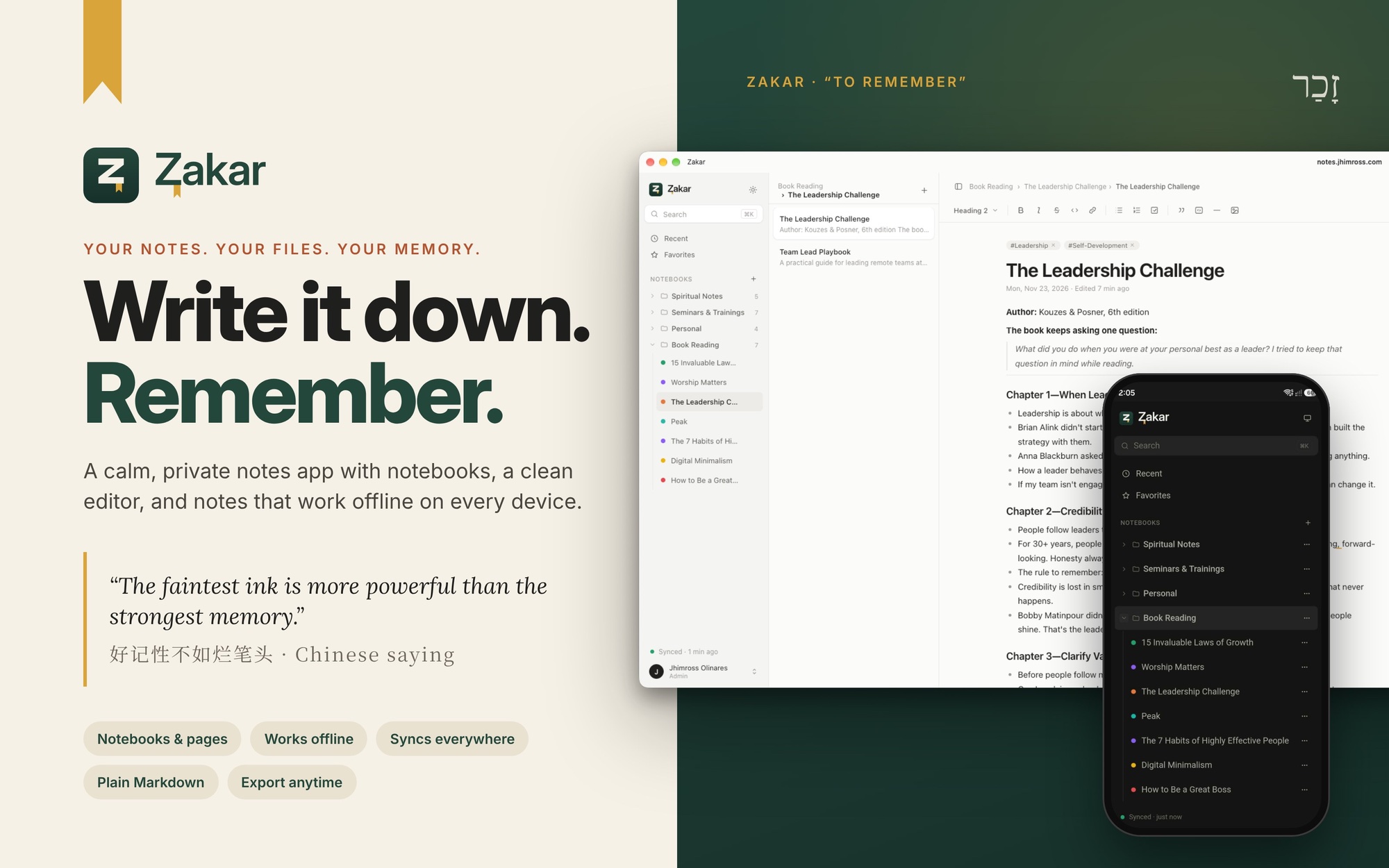
"The faintest ink is more powerful than the strongest memory." — Chinese saying (好记性不如烂笔头)
I've always liked writing things down: meeting notes, random ideas, lessons from books, memories from trips. For years, OneNote was where all of it lived, from my college class notes to my personal reflections.
At some point, I started wanting something of my own. Something familiar and simple, but with more control over my notes. That idea became Zakar, a notes app that took about a year of ideas, experiments, and building.
One trip in December 2025 is what made me take it seriously.
A camera left behind
I traveled to Japan on my own with just my bike and a camera. I cycled around, tried new food, got lost a few times, and filmed almost everything: the roads, the scenery, the quiet mornings.
That same week, I flew to Thailand for WordCamp Bangkok. Somewhere between check-in and arrival, I realized my camera was gone, along with almost all my videos from Japan.
Thankfully, someone had turned it in to the airport's lost and found. I never got to thank that stranger, but I'm genuinely grateful.
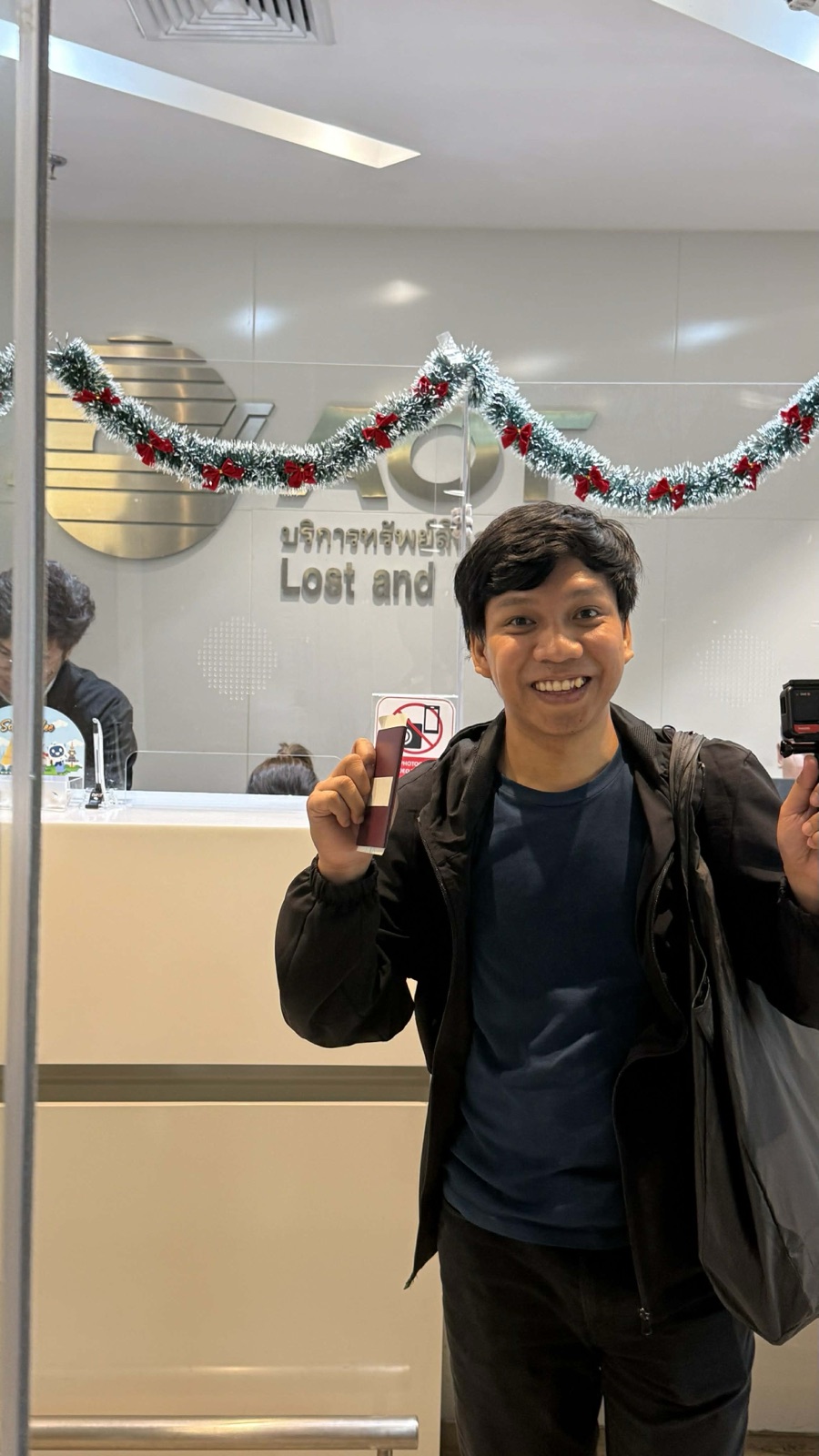
Reunited with my camera at the airport's lost and found.
When a backup isn't really a backup
Honestly, I wasn't too worried about the videos. I had already backed them up to my laptop before leaving Japan.
Then, while I was in Thailand, a major Windows 11 update required me to sign in with a Microsoft account. When I got back into my laptop, the folder with my backups was empty. Microsoft eventually rolled back the change, but my files didn't come back with it.
Instead of enjoying Bangkok after WordCamp, I spent hours in my hotel room running recovery tools and hoping.
The irony stuck with me. A stranger at a busy airport returned my camera, but the backup on my own computer disappeared because of a software update.
Taking back control
While waiting for yet another recovery scan, I started questioning how much I depended on platforms I didn't really control.
When I got home, I replaced Windows 11 with Linux Mint, and later moved to a MacBook. It wasn't about finding the perfect operating system. It was about being more intentional with my tools.
Then I thought about OneNote. If I could almost lose my travel videos, what would happen to years of notes I'd been collecting since college? I didn't want to find out.
Meet Zakar
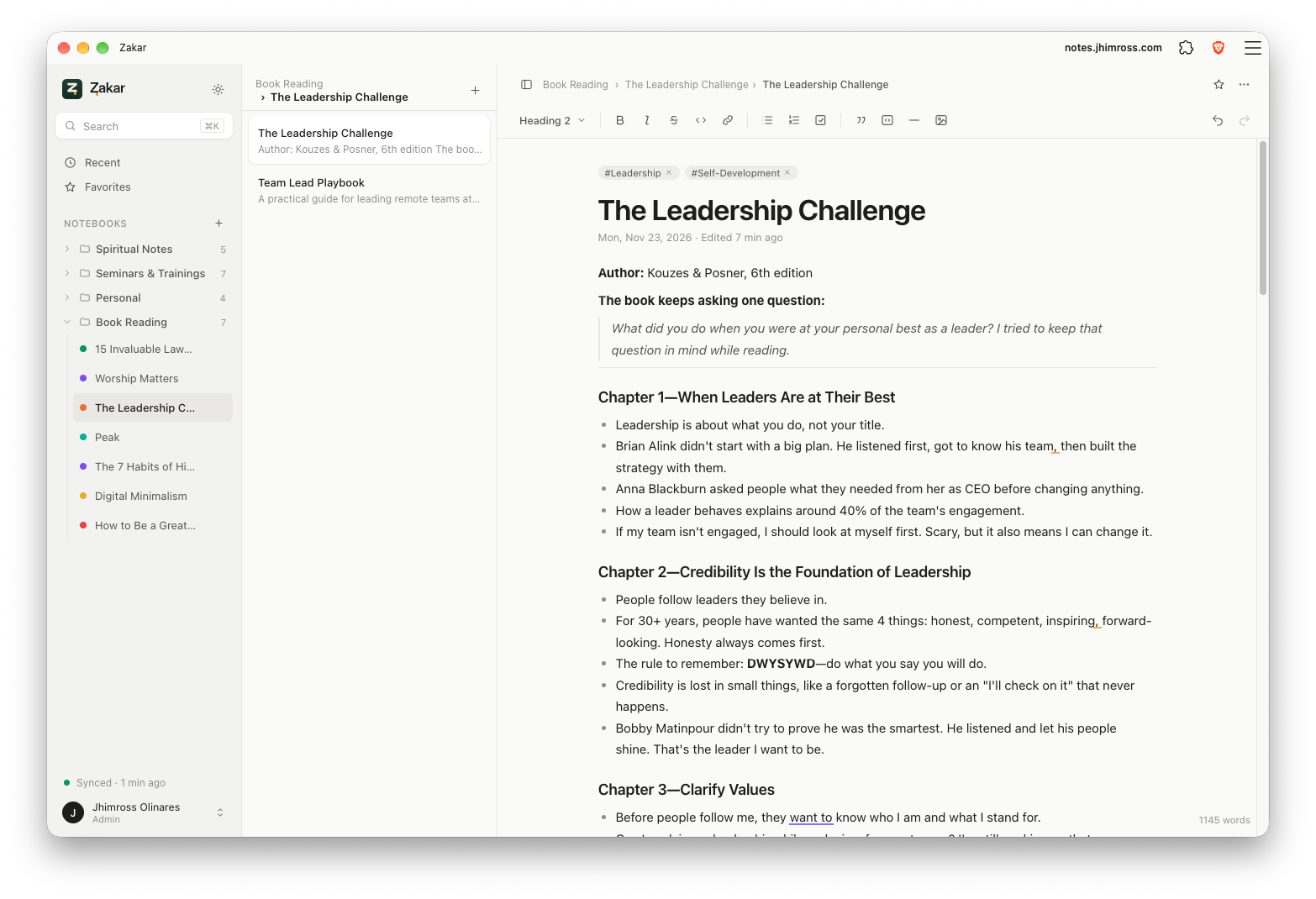
Zakar on my Mac, with my notebooks on the left and my notes on the right.
I built Zakar for myself first. I wanted it familiar enough that leaving OneNote wouldn't feel like starting over, but with one important rule: my notes stay mine. Everything is stored in plain Markdown, so I can export my notes, open them in another editor, or move them anywhere.
Here's what it can do so far:
- Familiar structure. Notebook groups, notebooks, pages, and subpages, with drag-and-drop.
- A simple editor. Headings, lists, tables, images, tags, and a quick formatting menu.
- Works offline. It's a Progressive Web App (PWA), so it installs on my laptop, tablet, or phone and syncs when I'm back online.
- Quick search. Ctrl/⌘ + K, plus Favorites, Recent, and Trash.
- Easy import and export. Bring in Markdown files, export notes as PDF, text, or Markdown, or download everything as a ZIP.
- Private by default. There's no public sign-up. I decide who gets access.
The first thing I did was move my OneNote notebooks over. Seeing years of notes, from college until now, living in an app I built myself was quite something.
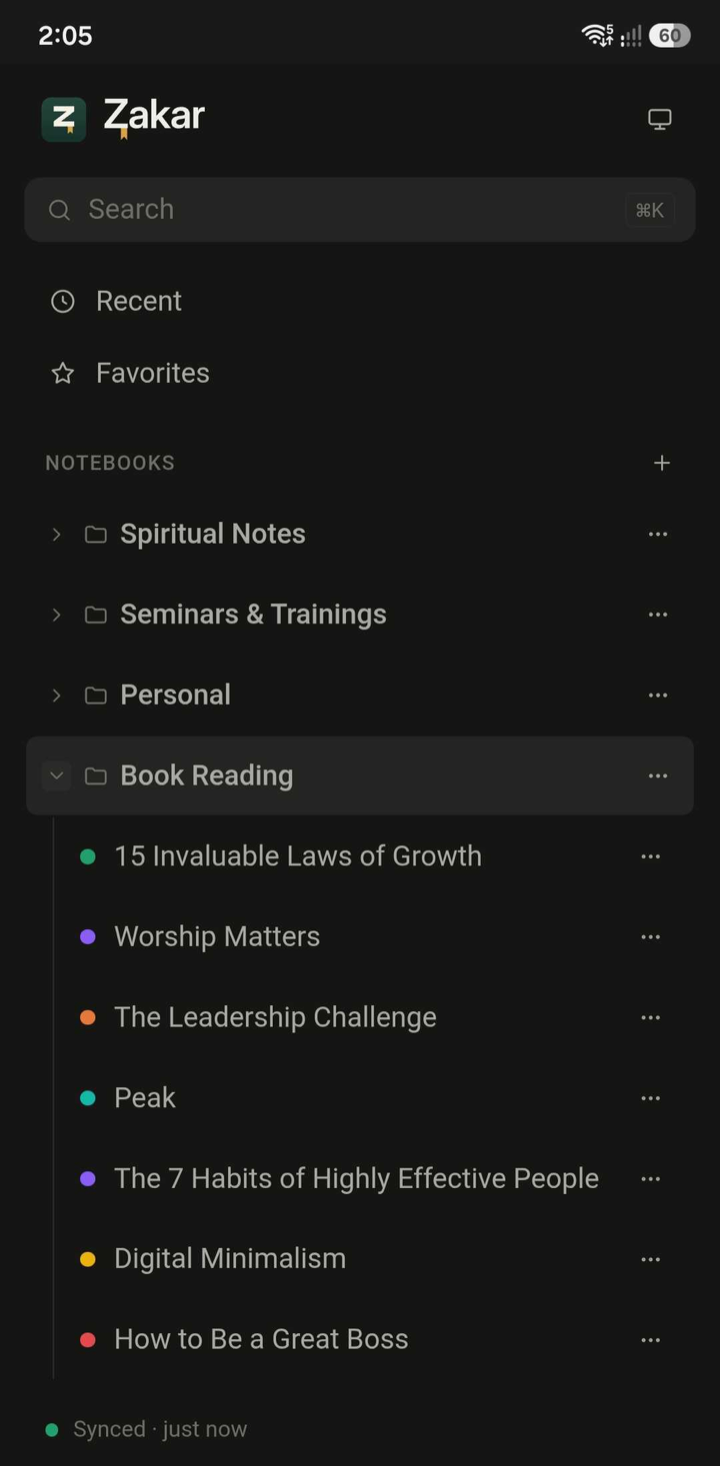
My notebooks on my phone, in dark mode. It's nice being able to access them wherever I am.
Why the name Zakar?
Zakar (זָכַר) is a Hebrew word that means to remember.
In Exodus 17:14, God tells Moses, "Write this for a memorial in a book." The word for memorial, zikkaron, comes from the root zakar. Malachi 3:16 also mentions that "a book of remembrance was written."
I love that connection. Writing things down and remembering go hand in hand. It's the same idea as the Chinese saying at the top of this post: no matter how good our memory is, writing things down matters.
Even the logo carries it. It's a letter Z with a bookmark ribbon, like a page you've marked so you can always come back to it.
Zakar is open source
Zakar is open source under the MIT license. Anyone can read the code, run their own copy, or build on top of it.
This matters to me for the same reason I built it. Open source means you're never locked in. If I stopped working on Zakar tomorrow, the code would still be there for anyone to keep it going. You don't have to trust a company to keep your notes safe. You can see exactly how it works.
It's also how I give back. So much of what I know came from open-source projects and the communities around them, especially WordPress. Sharing Zakar is my small way of paying that forward. If something in it is useful to you, take it. If you find a bug or have an idea, I'd love a pull request or an issue.
Write it down. Remember.
Losing my camera and almost losing my videos taught me something I should have learned earlier: having a backup doesn't automatically mean your files are safe.
I'm not saying everyone needs to build their own notes app. But it's worth being intentional about where your files live and how much control you have over them.
Zakar is my place for the things I want to remember. I'm sharing it in case it helps you find yours.
Write it down. Remember.